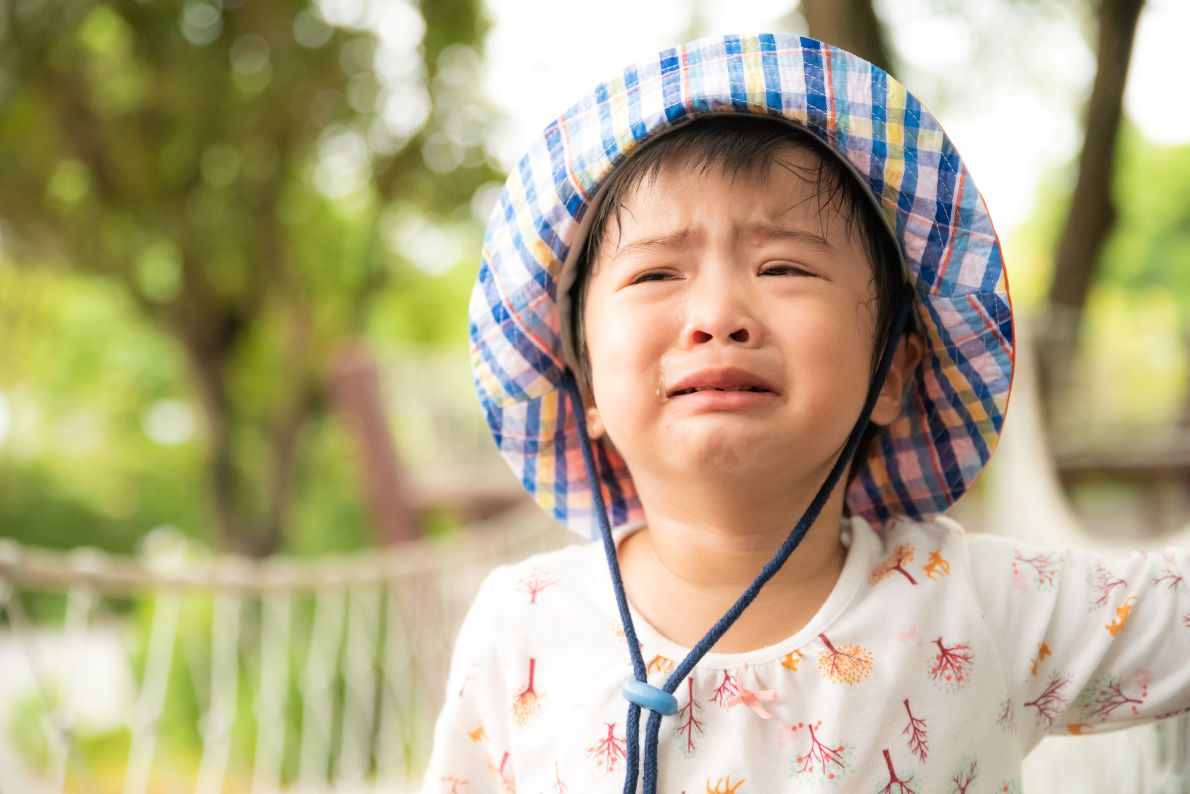
In daily life, when children throw a tantrum or burst into tears, parents often find themselves responding like this:
“What’s wrong with you? Why are you crying?”
“If you keep crying, I won’t want you anymore! Be quiet!”
“Stop it right now!”
While these reactions may temporarily stop a child, they often overlook the real drives behind the emotions. They may also suppress children from learning how to face and handle emotions in the long run. In fact, the ability of emotion regulation is one of the key indicator in children development. It does not only help children to build their self-awareness and develop social skills, but also contributes to a more positive and stable family environment.
The Limits of Going It Alone in Parenting
Understanding the importance of emotional education is one thing; putting it into practice in the reality of everyday parenting is quite another.
Most parents may likely have the experience of feeling helpless in parenting. Despite their best efforts to remain patient and guide their children, things do not always go as planned. When a child breaks down in tears or refuses to cooperate, parents may find themselves losing control of their own emotions. These emotional tug-of-wars often leave parents feeling exhausted and frustrated, causing them to question whether they are capable of guiding their children effectively and maintaining healthy family relationships.
This sense of helpless does not come from the incompetence of parents. Rather, it often arises from our usual practice to face parenting challenges alone. Adults are accustomed to give orders to let children calm down or correct their behavior, but such one-sided instructions often leave the parent-child connection neglected.
Is Parallel Communications more Effective than One-way Instructions?
As the social and emotional learning (SEL) of children is largely influenced by family environment, building the two-way connections between parents and children requires reshaping the overall family atmosphere. To assist parents in completing this mission, the HKSPC PaMa Kids Child Development and Parent Resource Project Team has launched the Parent-Child Parallel Emotional Learning Group, which applies the learning model based on "two-way parent-child engagement" and "parallel intervention".
- Parallel Co-learning Mechanism: Parents and children learn simultaneously. In the Parent Group, parents acquire emotional coaching and guidance skills, while in the Children’s Group, young children learn basic emotional vocabulary and emotion-regulation strategies.
- Two-Way Joint Practice: During combined parent-child sessions, parents and children interact within the same setting. Social workers and child care workers provide real-time coaching and guidance, enabling parents to put newly learnt emotion-responsive skills into practice when responding to their children's emotions.
To demonstrate the evidence-based outcomes of this programme to the public and industrial partners, the Team hosted a sharing session cum experiential workshop on 27 June and the results are highly recognised by practitioners both from the education or social welfare sectors. According to the randomised controlled trial (RCT) conducted jointly by the Team and the Department of Social Work at Hong Kong Baptist University, the data precisely tracked the changes of parents before and after joining the Learning Group. Compared with the control group whose members did not participate, parents in the intervention group demonstrated significant improvements in the following areas:
- 4% of parents showed a significant positive improvement in life satisfaction, reaching the programme's target outcome;
- 6% of parents successfully broke the limits of old parenting styles and achieved a significant reduction in parenting stress;
- 3% of parents experienced a significant increase in their subjective well-being, meeting the programme's target benchmark.
As participating parents reflected: "Before joining the Group, the same parenting challenges kept repeating themselves. Now, I have a practical framework to follow and this makes me feel much calmer. I have learnt to connect with my child first before addressing the problem.”
The Core Principles of the Group: Connect before Correct
The shared parenting principle of the Group is, “Address the feelings before addressing the issue” (Connect before Correct). This approach helps parents to guide children effectively in managing their own emotions. We often have the belief that “managing emotions” means solving the problems facing, but in fact empathy is the first step in building connection. Before addressing the issue itself, parents should first identify and precisely name the child's emotions from their facial expressions, behaviours, and tone of voice, like “Are you feeling disappointed right now?” With reference to the “Iceberg Theory” shared in the Group, parents are able to look into the emotions and unmet needs that lie beneath children's observable behaviours. When the emotions of children are understood and accepted, parents are then in a much better position to work together with them to figure out solutions to the problem at hand.
Before and After: Take Care of Yourself before you can Take Care of your Child
A presumption to manage children’s emotion is that parents themselves must be in a psychological state that allows them to do so. One of the focuses of the Group is the self-awareness of parents on their own emotions, encouraging them to accept their own feelings and the fact that they are not able to handle the matter right at the moment. Through guided reflection, parents explore their own emotional triggers and learn to adjust, take a break and recharge when they are not mentally ready. This helps parents to avoid direct and further conflicts with children that escalate the situation.
When parents learnt to accept their own emotion and gain a through understanding of the emotional development of children, they are more able to adjust their expectation on parenting to match with children’s developmental stage. Parents come to understand that it is natural developmental progress for children to express their negative emotions through throwing tantrums. Children are only “not YET able to”, rather than “not able to” express their complex inner emotions through means other than crying or tantrums. As parents let go of their feeling of confusion, guilt and anger, they naturally become more capable and confident in responding to their child’s emotions, strengthening their confidence in parenting.
The Best Parenting Happens When We Grow Together with Children
Through the parallel intervention approach, parents and children are able to build a set of common language on emotions and make it easier to discuss feelings and emotions naturally in daily life. When parents learn to “Connect before Correct”, parenting is no longer emotional tug-of-war. Instead, it becomes a warm and treasurable connections in parent-child relationships.
Know More: Parent-Child Parallel Emotional Learning Group
This project is designed and delivered by an interdisciplinary team comprising educational psychologists, occupational therapists, social workers and child care workers. It is grounded in the RULER model and the Theory of Emotion Socialization. The project has received positive feedback, including recognition during a sharing session with Hong Kong Baptist University. The project provides parents with a range of materialistic resources for emotional education like Emotion Game Cards, the Mood Meter, and the Emotion First-Aid Box. These tools empower families to build healthy communications and linkage with children through meaningful conversations on emotions.
Acknowledgement: This research is funded by Rusy and Purviz Shroff Charitable Foundation, and supported by Department of Social Work of Hong Kong Baptist University on data analysis and results evaluation.
Maggie Chui
Project Leader of PaMa Kids Child Development and Parent Resource Project, HKSPC
Chui holds a Bachelor degree of Education (Honours) in Early Childhood Education at the Education University of Hong Kong. She is also a registered child care worker and special child care worker, dedicating to parenting services.