

Many parents are bothered by their children's picky eating. Some children refuse to eat even when they are hungry, while others are only willing to eat a certain range of food. What are the tricks for parents to handle children as picky eaters?
SOS Approach to Feeding was established by Dr. Kay Toomey, a child psychologist, in 2023. It is an approach of therapy for parents to tackle their children’s picky or difficult eating. Suggested by the Approach, young picky eaters usually have these characteristics:
- Only take a narrow range of food
- Care about the colours, shapes and textures of food
- Have unpleasant experience in eating
Busting Myths: Picky Eating is just the Tip of Iceberg
Children acting selectively in eating on the table is actually just the tip of iceberg. There are various physical and psychological needs of children that are hidden underneath. According to SOS Approach to Feeding, these needs are organ or muscle functions, nutritional status, learning ability and past experiences, developmental status, eating environments, and sensory processing difficulties that are often being overlooked.
Eating is a process that engages 8 sensory systems such as taste, smell, touch, vision, the vestibular sense (balance), and proprioception. When children feel strong tastes or odors, sticky or silky textures from food, or when they are not sitting rigidly, they might become resistant to food. Children might not behave picky in eating intentionally. On the contrary, this is a sign that their bodies are protecting them from unpleasant feelings.
Tips to Resolve Picky Eating: Strategies to Comfort Sensations
Before Meal…
(1) 2-3mins of sensory preparation activities
When children are too excited before meal, parents may carry out calm-down activities with them. Oppositely, when children appear sleepy, exhausted or sluggish, parents can engage them in alertness‑boosting activities. We have to adjust the state of alertness of children to be “just fine” to having a meal. Below are some examples for calm-down and alertness‑boosting activities.
|
Calm-down Activities |
Alertness‑boosting Activities |
|
|
(2) Take part in the process of cooking
Parents may invite children to become “Little Chef” by involving them in the cooking process, like washing and tearing vegetables, mixing and cutting ingredients and so on. In these simple tasks, children observe, smell and touch food with ease and this is a good chance for them to approach and become familiar to a variety of food.

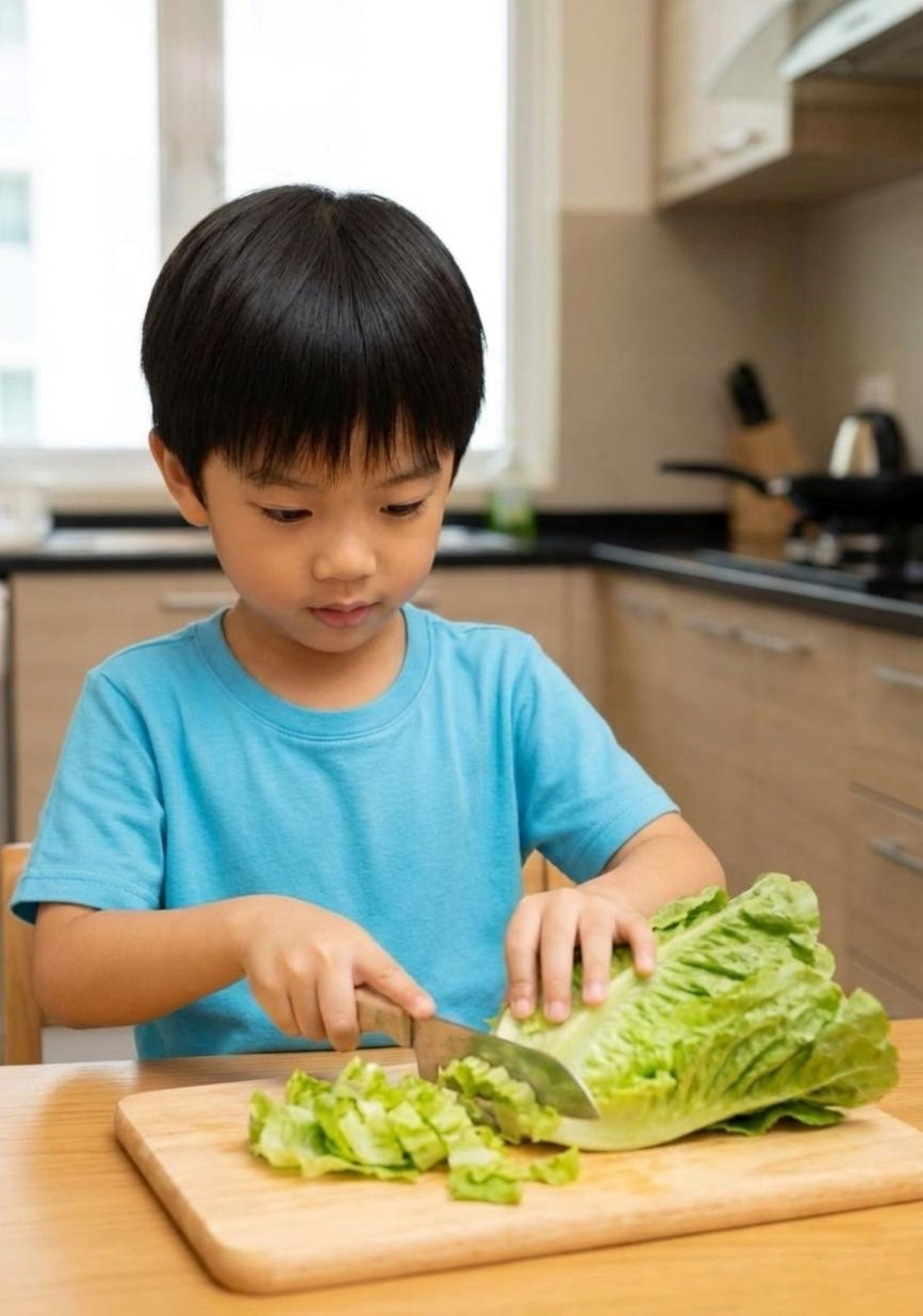
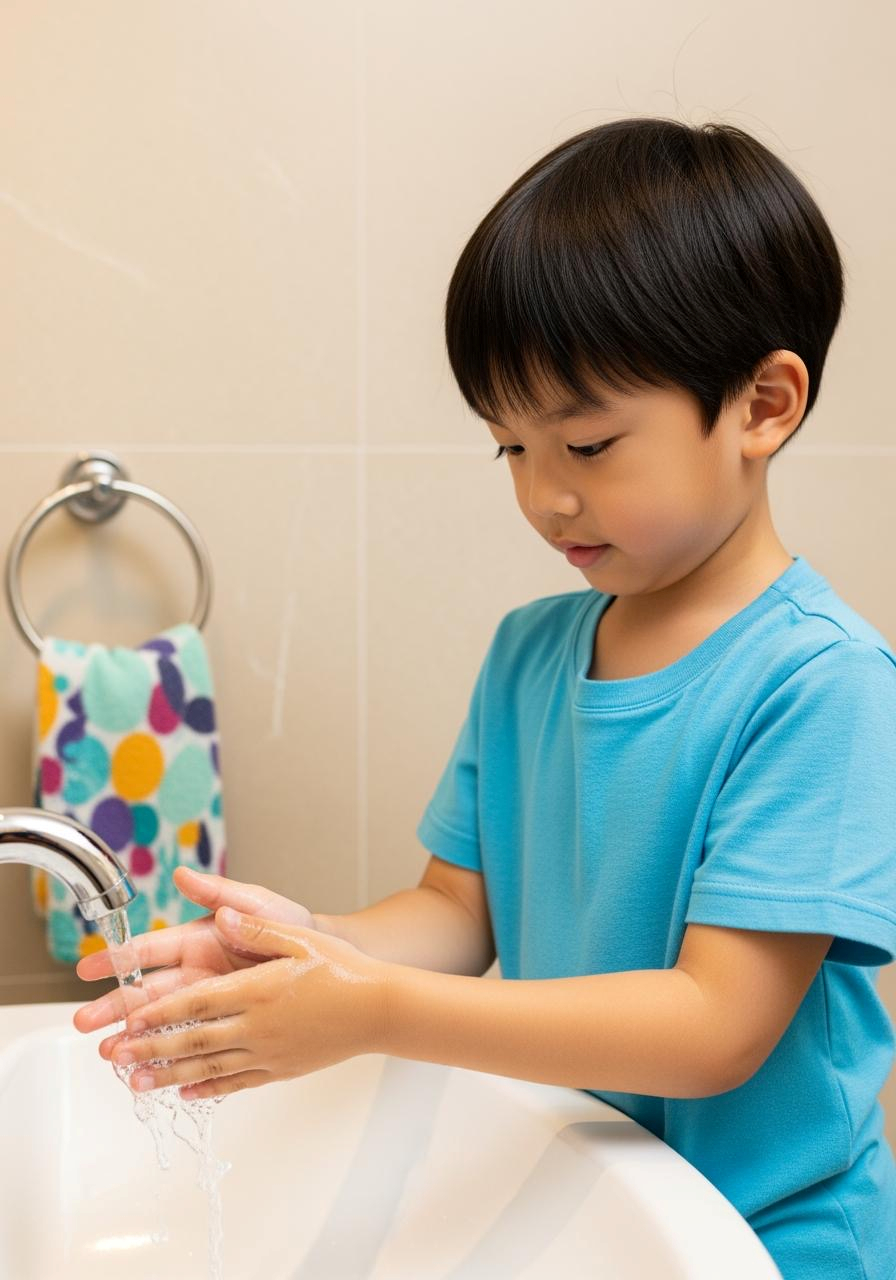
(3) Wash hands 1-2mins in advance before meal
Washing hands is not only necessary for children’s personal hygiene, but also a way for their body and consciousness to be ready. Mild sensations, including changes in temperature, the texture of soap bubbles, and the feeling of rubbing hands, can support children in reaching a “just-right” level of alertness.
During Meal…
(1) Prepare a comfortable environment for eating
A quiet, neat and stable environment helps children to focus on the task of having meal. Before starting, parents should turn off TV and music, then adjust the direction of the seat to be turning away from windows. Parents should avoid using smartphones and tablets on table, and remove toys or other distracting objects from table.
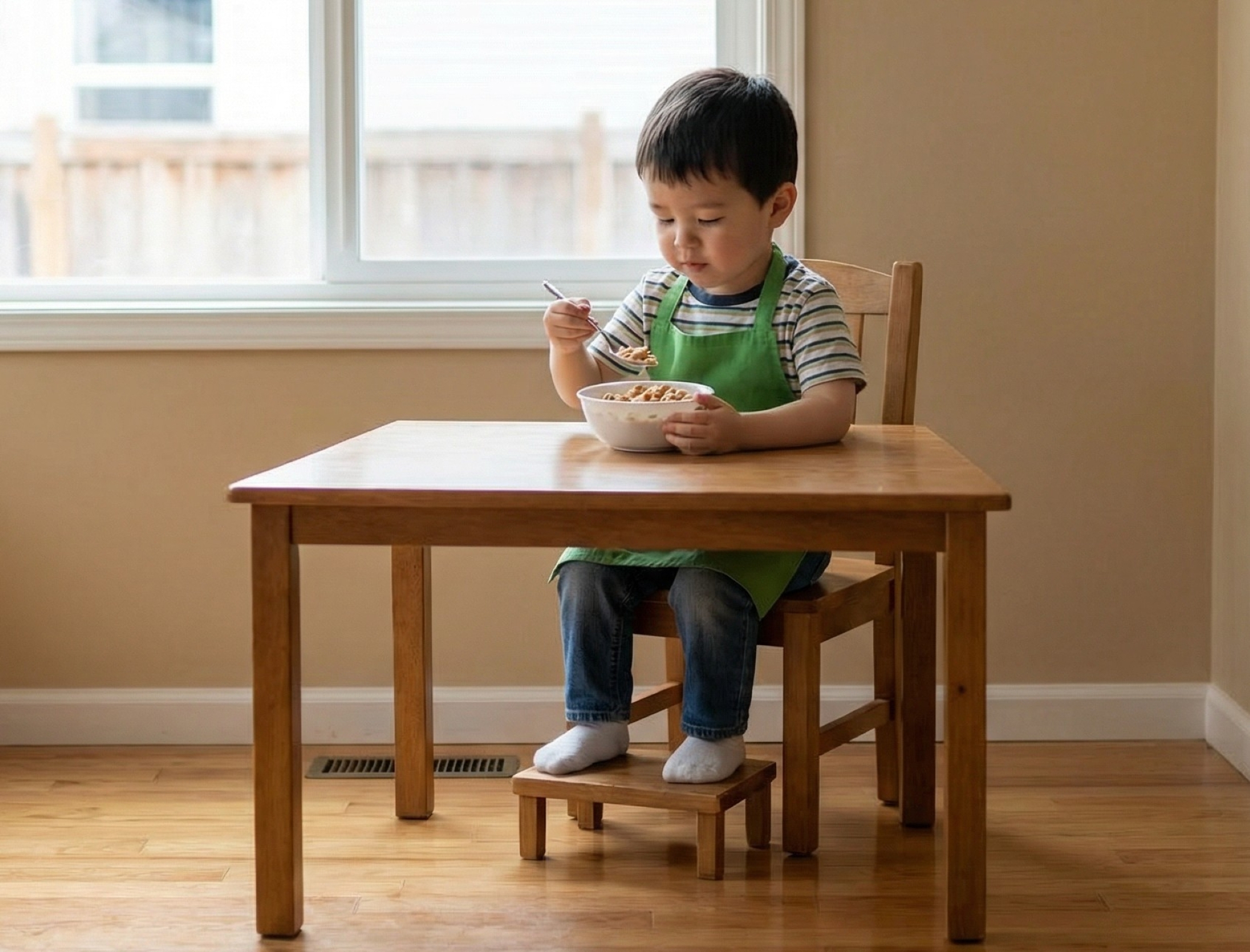
(2) A stable posture: the 90-90 Principle
To enjoy meals in the most comfortable state, children need to feel secure by sitting in stability. Parents should assist children with maintaining a proper sitting posture.
- The hips and knees should be at a 90-degree angle with the ankles, with the knees bent and aligned vertically toward the floor
- Both feet should be placed flat on a footrest, not dangling or crossed
- The table height should be between the child’s navel and chest, allowing their forearms to rest on the table at a 90-degree angle to the upper arms
(3) Approaching food
During mealtimes, children should be given opportunities to explore food in various ways. They may begin with using different utensils, like straws, forks, toothpicks or resealable bags to move, mix and smell the food before gradually bringing it to their mouths. Parents may also take this opportunity to introduce to children the shape, colour, temperature and texture of food, helping to enrich their knowledge of food.

Selective eating in children is not only caused by their likeliness to food. The physical and mental state before meal, the eating environment, and the knowledge of children towards the process of eating, are all influential to their willingness to eat. Therefore, starting today, let’s pay closer attention to children’s physical and mental states before meals and help them feel fully prepared to enjoy their food!
References:
- SOS Approach to Feeding. (2010). Why SOS Approach to Feeding? SOS Approach to Feeding. https://sosapproachtofeeding.com/why-sos-approach-feeding/
- Toomey, K. A. (2023). Picky eaters versus problem feeders [PDF handout]. SOS Approach to Feeding.
Wong Yi Man
Occupational Therapist I
Centre for Child Enlightenment of HKSPC
Wong is a holder of the Master degree in Occupational Therapy from the Hong Kong Polytechnic University, and in Psychology from the Chinese University of Hong Kong. She is currently responsible for On-site Pre-school Rehabilitation Services (OPRS) and Tier 1 Support Services