banner_inner_6
Resources Centre
Feature Articles
Tag Filtering:
close-up-cute-baby-boy-sleeping-bed-home
21/08/2025
Sweet Dreams Ahead: Establishing a Healthy Sleep Routine for Toddlers Aged 1–2
  Many parents have experienced that curious moment when their energetic little ones suddenly drift off to sleep without signs. One second they're bouncing with excitement, and the next they're “switched off.” It's often a delightful surprise, leaving parents both entertained and wondering how to help their babies develop a more consistent sleep routine.   Importance of Baby Sleeping In the first three years of life, a newborn revolves around three essential activities: eating, playing, and sleeping. Among these, sleep occupies nearly half of their time. It is the most effective form of recharging and scientific research consistently shows that nothing matches the benefits during these formative years. Sleep plays a vital role in cellular recovery. During deep sleep, the body releases human growth hormone (HGH), a crucial hormone for muscle repair and protein synthesis. This natural process accelerates cell regeneration and helps restore damaged or senescent cells. Infants have a high basal metabolic rate, making quality sleep beneficial to their growth and development. Additionally, it strengthens their immune system, stabilises emotions, and improves cognitive functions such as focus and learning.   Everyday Sleeping Time How much sleep do children need? To answer that, we need to consider their age, behavioural patterns and emotional responses. As children grow, their sleep structure gradually matures. Around the age of one, babies begin to develop a basic concept of day and night, laying the foundation for a more consistent sleep routine.   According to the Guidelines published by the World Health Organisation (WHO) in 2019*, toddlers aged 1-2 years need approximately 11-14 hours of sleep, which includes 10-12 hours of nighttime sleep and 1-2 naps during the daytime, each lasting 1-2 hours.   While time is an important indicator of children’s sleeping quality, parents should also pay attention to their behaviours during sleeping andupon waking. Frequent turning over, kicking off quilts, sudden awakenings, prolonged groggy, irritability, or concentrating difficulty may signal poor sleep quality. At these cases, parents should take notice and make timely adjustments to their child’s sleep habits.   As children develop their motor and cognitive skills, they may begin to delay or resist naps and sleep. How should parents respond?   Three-Step Bedtime Routine Regular and appropriate nap time Research indicates that children's afternoon naps should last for 2 hours and should ideally end by 3:30 p.m. to minimise any potential impact on nighttime sleep. In HKSPC day crèches, an afternoon nap is scheduled from 12:30 p.m. to 2:30 p.m. for children aged one and older. We also recommend that parents maintain a consistent rest routine on both weekdays and weekends to help stabilise their children's biological clocks and promote healthy sleep patterns. Comfortable Sleeping Environement Day crèches provide a temperature-comfortable, dimly lit environment to help babies settle into sleep. We remove stimulating items such as toys from the crib and play gentle music, creating a soothing atmosphere that encourages peaceful rest. Regular Bedtime Rituals Teachers in day crèches create bedtime rituals for babies, helping them to develop regular sleeping habits. Bedtime rituals refer to a series of preparatory activities performed before sleep, which are typically brief and static. For example:   Singing or finger rhymes   Pat babies’ bodies   Switch off lights A consistent bedtime ritual is key to creating a calm sleep environment and gently guiding children toward rest. When parents or caregivers follow the same routine, babies begin to recognise the sequence and understand what comes next. Over time, this familiarity helps them wind down naturally, making it easier for them to feel sleepy and drift off into a peaceful slumber.   Every parent hopes to see their baby fall asleep with ease. With patience, consistency, and loving guidance, building healthy sleep habits from an early age becomes not only easier but also more enjoyable.   *WHO guidelines on physical activity, sedentary behaviour and sleep for children under 5 years of age. Geneva: World Health Organization; 2019. Licence: CC BY-NC-SA 3.0 IGO.   Lam Ka Man Centre Supervisor Hong Kong Society for the Protection of Children SIA Shaukiwan Day Creche With over twenty years of experience in early childhood education services, Lam holds a Master of Arts in Parent Education from The Chinese University of Hong Kong and a Bachelor's degree in Early Childhood Education from Hong Kong Baptist University. She is also a certified instructor of the "6A Character Education™" program. Over the years, she has placed great emphasis on parent education, hoping to work hand in hand with parents to nurture children and to experience the beauty of growing together with them.
happiness-family-daily-life-photo-young-mother-with-kid-looking-mirror-using-toothbrush-cleaning-teeth-bathroom-together-every-morning-night
22/04/2025
Dental Care Guide: Cultivating a Positive Brushing Attitude
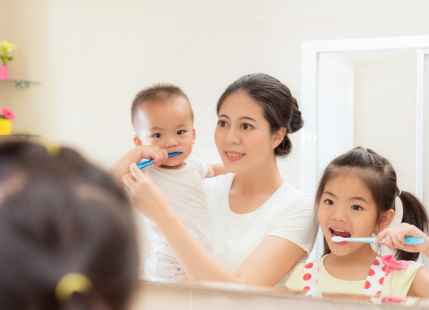
  Do you know what "320" represents? To promote oral care, the FDI World Dental Federation designates 20 March each year as "World Oral Health Day." This number is quite interesting; it represents the 20 baby teeth in children, the 32 permanent teeth in adults, and 0 tooth decay—symbolising that everyone, regardless of age, should aim for "zero tooth decay" to maintain oral health.   As babies grow up, they no longer need adults’ help to clean their teeth. When they turn one, parents can begin to teach children the importance of teeth protection and nurture their good dental habits. Many parents may face challenges when encouraging their children to brush their teeth. Let’s explore the following tips to create a relaxing brushing mood for young children!   Dental Care Tip 1: How to Clean Baby Teeth Effectively? Children will have 20 teeth by the age of 3, with incisors and molars growing around their first birthday. As children's fine motor skills develop steadily at this age, it is an ideal time for parents to encourage children to brush on their own. Parents may continue to assist children with brushing in the morning and evening when necessary. The steps for brushing are as follows:   Place the toothbrush at a slight angle against the gum line. Brush the outer surfaces of all teeth. Brush the inner surfaces of all teeth. Finally, brush the chewing surfaces of all molars. Done!   Parents have several ways to make brushing comfortable and fun, such as singing children’s songs while brushing to guide children to complete the task within the time. Besides, when assisting with brushing, parents should be gentle and cautious to avoid hurting children's gums, which could lead to their negative feelings towards brushing.   Dental Care Tip 2: Brush in the Morning and Before Bed Children sometimes find brushing “a fun game” instead of a task that has to be completed so they are not able to stay focused. Parents may consider brushing together to provide quality bonding time while allowing kids to imitate correct brushing gestures and habits. Remember to observe children's reactions and behaviours and offer them timely assistance and encouragement. Once children learn how to spit, they can start using fluoride toothpaste designed for kids.   Dental Care Tip 3: Choosing the Right Tools is Important Children may resist brushing if they are unfamiliar with the tools. Parents can make brushing a fun interactive experience by using storybooks to introduce the tools for brushing. Taking children shopping for toothbrushes allows them to feel the softness of different brushes and choose one they like. Parents can also let them try various toothpaste flavours to keep their interest in brushing.   Dental Care Tip 4: Cultivating Good Eating Habits Eating habits are closely related to dental care. The acids produced during meals are harmful to tooth surface, leading to mineral loss and, over time, tooth decay. Even drinking water is not able to neutralise the acids on the teeth. Therefore, reducing the frequency of meals is the effective approach. The principles are as follows:   Limit meals to no more than 6 times a day. Have three substantial meals (breakfast, lunch, dinner) each day, with one snack time allowed between meals. Allow children to enjoy their favourite snacks and drinks during meals or snack time. Drink only plain water on a daily basis. Avoid using snacks as rewards. Reduce the intake of sweet food.   Furthermore, children should be guided to wean off bottle use completely by 18 months to reduce the risk of tooth decay (milk sugars cover baby teeth when the baby drinks and sleeps at the same time) or ear infections (milk may flow into the ear canal along the eustachian tube while lying down). After turning one, children can be taught to use a cup to drink water or other beverages.   "Baby Teeth Health Promotion” Programme in HKSPC Day Crèches Our day crèches implement the "Baby Teeth Health Promotion" programme annually, partnering with parents to raise awareness on the importance of dental care for young children. We support parents through various activities, including parent seminars, promoting dental care months, sharing oral care booklets, and accessible online resources.   Rome wasn't built in a day, and so as cultivating good dental habits in children. Parents need to accompany and guide children with patience, making dental care a part of their daily routines.   Yuen Hau Ying Centre Supervisor Hong Kong Society for the Protection of Children William Grimsdale Day Creche With over 20 years in early childhood education and a Master’s degree from The Education University of Hong Kong, Yuen specializes in the development of children aged 0–6. Yuen advocates for learning through daily life and nurturing independence, while fostering warm, respectful relationships between children, parents, and educators and creating a joyful atmosphere in the day creche.